Stand Evaluation and Recovery
As planting wraps up and corn begins to emerge, many locations across Western Canada have experienced adverse weather conditions that can leave crops uneven, stressed, and variable in staging. Whether fields have seen heavy rain, drought, hard frost, heavy winds, or a combination of events, getting boots on the ground is the best way to separate benign symptoms from areas that may require some management changes. The main areas to assess are plant uniformity, health, root development, and to observe if crop recovery is underway.
What to Scout for by Weather Event
Heavy rain or waterlogging:
The extent of damage caused by water logging contributes to a couple of factors, the stage of the corn plant, the duration in which flooding has occurred, and temperature while flooded. When corn is submerged for 48 hours or more, survival rates and yield potential can decline rapidly.
Early Vegetative corn - look for:
Still emerging Corn:
|
Figure 1. "leafing out" Due to hard crust formation during emergence |
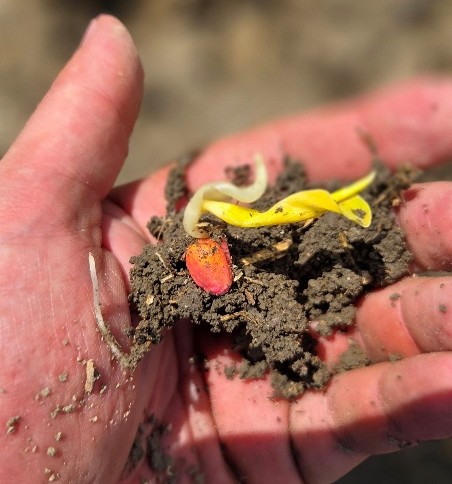
Once soils exceed field capacity, soil pores fill with water, displacing oxygen, effectively starving roots of oxygen and leading to root injury or plant death. Extended wet and cold conditions also increase the risk of seedling disease. In addition, monitor for mobile nutrient deficiencies, particularly nitrogen loss caused by leaching and denitrification.
Drought Stress
Fields that are planted into inadequate moisture can experience reduced yield potential, even if all plants do end up emerging. When scouting drought-stressed fields before, during, or after emergence we want to focus on a couple of things:
Uneven emergence
Poor root development
Stunted growth
Curling of leaves
Stunted internode length
Inconsistent soil moisture causes plants to emerge at different times. Corn plants emerging two to four days later than the neighboring plants can become less competitive throughout the season, often resulting in smaller ears and reduced yield contribution. Drought also decreases the crops weed competitiveness, a vital tool in the belt of producers to manage problem weeds.
Hard FrostPatience is key after a hard frost event has occurred, damage may look more severe than it may be. Before the V6 growth stage, the growing point remains below ground, allowing for most plants to recover. Symptoms of frost damage appear as:
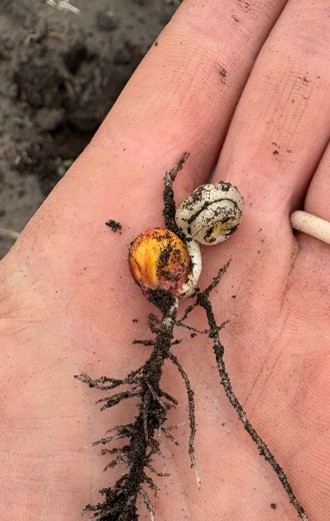
If frost occurs shortly after planting, or cold conditions persist during imbibition, cold shock can results leading to imbibitional chilling, delaying or preventing emergence altogether.
|
Figure 2. Corkscrewing due to imbibitional chilling. |
Herbicide Applications Following Weather Stress
Depending on the stage of your crop at the time of the weather event, you may be nearing or in your first spray timing window. Understanding both crop condition and herbicide characteristics is critical before spraying stressed corn. After a heavy rain event, observe the leaf wetness, including if there is any water in the whorl of the plants. Heavy rain can temporarily thin the leaf cuticle, increasing herbicide uptake and the risk of crop injury. Giving the crop some time to recover can drastically decrease the chance of any herbicide damage.
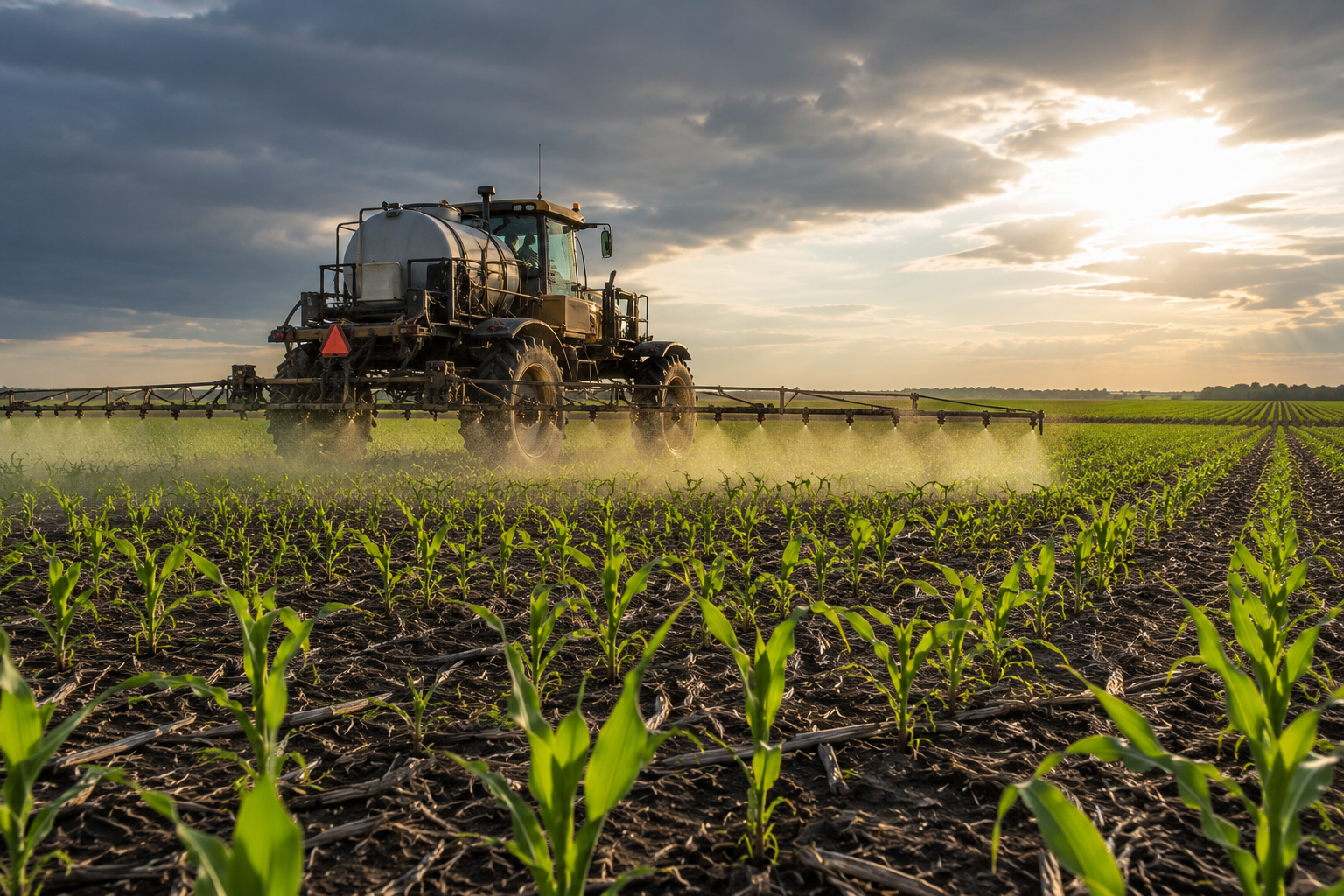
Environmental conditions leading up to and following an application are equally important. Large temperature swings, cool nighttime temperatures, and overcast conditions can limit plant metabolism and reduce the plant’s ability to process herbicides without injury. While fields are still recovering, it is important to ensure the crop is actively growing before spraying. Corn that is stalled or discolored is generally more susceptible to herbicide injury.
Tank mix combinations should be looked at carefully under stressful conditions. Certain herbicide combinations, adjuvants, and the addition of liquid fertilizer can increase crop response when plants are already under environmental stress.
As the saying goes – don’t kick the crop while it's down.
Conclusion
Early season weather stress can create a wide range of symptoms in corn; however not all visible damage is yield limiting. The most important steps following any stress event is timely and thorough field scouting to accurately assess stand health, plant recovery, and overall yield potential.
Focusing on plant uniformity, root development, vigor, and signs of active regrowth can help to determine appropriate actions are required to preserve yield potential.
Patience is key, as corn can often recover better than initial symptoms may suggest. Strong and effective communication between growers, agronomists, and retail teams can help to ensure timely decisions are made around herbicide applications, fertility, and most importantly, how to achieve the best yield.